
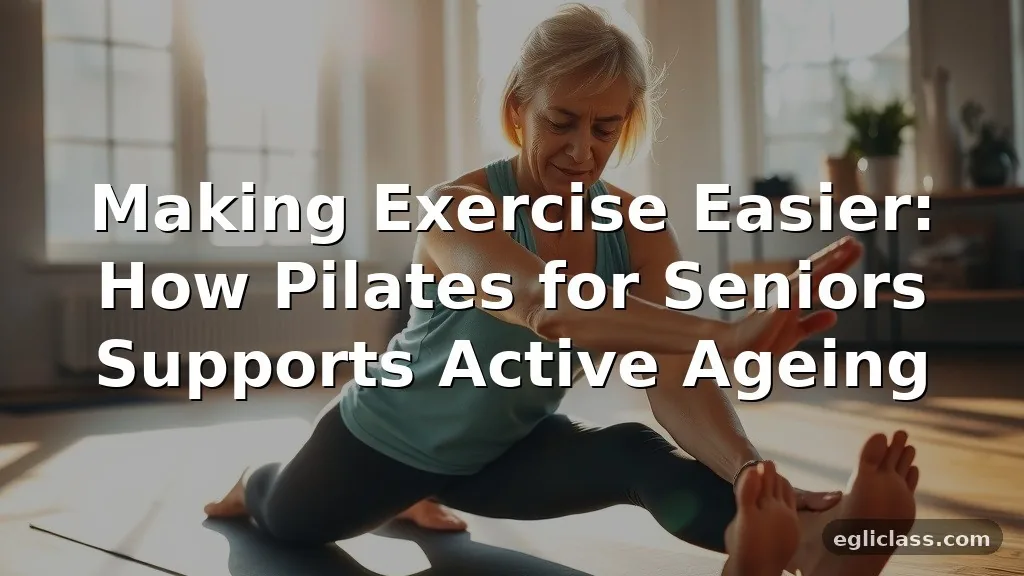
For many, the process of aging brings a natural apprehension toward vigorous physical activity. The fear of injury, combined with the gradual decline in mobility, can make the prospect of traditional gym workouts feel daunting or even impossible. However, making exercise easier involves shifting the focus from high-impact intensity to controlled, purposeful movement.
Pilates for seniors has emerged as a cornerstone of active aging, offering a low-impact yet highly effective methodology that respects the limitations of the body while simultaneously unlocking new levels of physical potential. By prioritizing alignment and breath, this practice transforms how older adults interact with their own physiology, turning daily movement from a chore into a source of vitality.
The Fundamental Principles of Pilates for Longevity
At its core, Pilates is not merely a series of stretches; it is a sophisticated system of body conditioning developed by Joseph Pilates. For the older demographic, the genius of this method lies in its emphasis on the “powerhouse”—or the core.
As we age, the muscles surrounding the spine and pelvis often weaken, leading to poor posture, back discomfort, and an increased risk of falls. By focusing on the deep abdominal muscles, the pelvic floor, and the multifidus muscles that support the spine, Pilates helps seniors reclaim the structural integrity they need to move with grace.
The beauty of this approach is that it is inherently scalable. Whether you are performing exercises on a mat or utilizing specialized spring-loaded equipment like the Reformer, the intensity is dictated by the individual’s current capability. This scalability is essential because it eliminates the “all or nothing” mentality that often leads to burnout or injury in older beginners.
When you focus on the precision of the movement rather than the repetition count, you allow the nervous system to adapt to new patterns of stability. This creates a foundation of strength that carries over into every aspect of life, from carrying groceries to playing with grandchildren.
Improving Balance and Reducing Fall Risk
One of the most critical health markers for older adults is balance. As we age, our proprioception—the body’s ability to sense its position in space—can diminish, often exacerbated by sedentary habits or inner ear changes. This decline significantly increases the risk of falls, which can lead to life-altering injuries.
Pilates addresses this by training the body to maintain stability while moving through various planes of motion. Many exercises involve asymmetrical loading, which teaches the body to stabilize on one side while the other is in motion, effectively mimicking the mechanics of walking and navigating uneven terrain.
Beyond the physical mechanics, the mental focus required during a session sharpens the mind-body connection. When a senior learns to engage their core while lifting a leg or rotating the torso, they are essentially practicing the exact skills needed to catch themselves if they stumble.
By strengthening the stabilizing muscles around the hips and ankles, the practice provides a “safety net” that improves confidence. You can learn more about the scientific benefits of physical activity and maintaining functional independence through the National Institute on Aging, which outlines how consistent movement contributes to long-term health.
Addressing Chronic Back Pain and Spinal Health
Back pain is perhaps the most common complaint among older adults, often stemming from years of poor posture, repetitive stress, or the natural compression of spinal discs. Traditional exercise often neglects the smaller, deeper muscles that support the vertebrae, focusing instead on larger, superficial muscles. Pilates takes the opposite approach.
By emphasizing spinal elongation and decompression, the practice encourages space between the vertebrae. This is a game-changer for those who feel “stiff” or “compressed” after a long day of sitting.
The exercises are designed to move the spine through all its natural ranges: flexion, extension, lateral flexion, and rotation. However, these movements are always performed with a focus on length and control. For instance, the “Cat-Cow” movement or the “Pelvic Curl” helps to mobilize the spine gently, flushing the tissues with blood and nutrients while alleviating tension.
Over time, this consistent mobilization helps to reduce the chronic aches that many seniors assume are just an inevitable part of aging. When the spine is properly supported by a strong core, the load is taken off the lower back, allowing for easier, pain-free movement.
The Role of Reformer Pilates in Assisted Movement
When discussing Pilates for seniors, the Reformer is often the subject of curiosity. Unlike mat work, which relies entirely on body weight and gravity, the Reformer uses a system of springs, pulleys, and a sliding carriage to provide resistance or assistance.
For someone with limited range of motion or joint pain, the Reformer is revolutionary. The springs can be adjusted to support the weight of the limbs, making exercises that would be impossible on the floor suddenly accessible and supportive.
For example, a leg-strengthening exercise on the Reformer can be performed while lying down, which removes the stress from the knees and hips while still effectively targeting the quadriceps and glutes. This “assisted” aspect is what makes the equipment so popular in geriatric fitness.
It allows seniors to build functional strength without the jarring impact of weights or high-intensity cardio. It also provides tactile feedback; the feeling of the carriage moving provides the user with immediate information about their alignment and control, which helps in correcting subtle imbalances that might go unnoticed in a standard exercise routine.
Mindfulness and the Breath-Movement Connection
One of the most overlooked aspects of exercise for seniors is the role of breathing. As we age, our breathing patterns often become shallow, which can increase feelings of anxiety and fatigue. Pilates places a heavy emphasis on lateral, or intercostal, breathing.
By learning to expand the ribcage while maintaining core engagement, seniors can improve their lung capacity and oxygenate their muscles more efficiently. This rhythmic breathing acts as a natural nervous system regulator, helping to lower cortisol levels and promote a sense of calm.
This mindful approach transforms exercise from a stressful obligation into a restorative practice. When you connect your movement to your breath, you are not just exercising your muscles; you are training your brain to stay present. This is particularly beneficial for cognitive health, as it requires concentration and coordination.
The focus on “what the body is doing right now” prevents the mind from wandering to worries or stressors, effectively providing a meditative benefit that complements the physical gain. It makes the exercise experience feel less like “work” and more like a period of self-care.
Customizing Classes for the Senior Demographic
Not all classes are created equal, and it is vital for seniors to seek out instruction that understands the unique physiological needs of an aging body. A quality class for older adults should prioritize safety, clear instruction, and a pace that allows for individual modification. Instructors who specialize in this demographic are trained to spot signs of fatigue and offer alternatives for those with specific conditions like osteoporosis, arthritis, or joint replacements.
When looking for a class, consider the size and the environment. Smaller groups or one-on-one sessions are often better for beginners, as they allow the instructor to ensure that movements are being performed with proper form.
It is also important to look for instructors who use inclusive language and encourage the use of props—such as foam rollers, magic circles, or soft balls—which can add support or challenge as needed. A good class should feel like a community where everyone is working toward their own personal best, without the pressure of competition or comparison.
Building Strength Without Joint Strain
A common misconception is that to build strength, one must lift heavy weights. For many seniors, the risk of injury from heavy lifting outweighs the benefits.
Pilates provides an alternative: eccentric and concentric muscle contraction using controlled resistance. By moving slowly through a range of motion, the muscles are challenged in a way that promotes tone and endurance without the inflammation often caused by high-impact gym training.
This type of strength is “functional strength,” meaning it translates directly to the movements required for daily living. Strong glutes make it easier to stand up from a chair; a strong core makes it easier to reach for items on a high shelf; strong arms make it easier to open jars or carry bags.
Because these exercises are performed with a focus on joint alignment, they actually help to lubricate the joints and improve the health of the surrounding connective tissues. This is essential for preventing the stiffness that often leads to a decline in activity levels among the elderly.
Consistency and the 80/20 Rule for Active Aging
A common question regarding the frequency of exercise for seniors is whether they need to train daily to see results. The “80/20 rule”—often applied in various contexts—suggests that 80% of your results come from 20% of your efforts, or in the context of lifestyle, that consistency is more important than extreme intensity. For seniors, the goal should be to incorporate movement into the daily rhythm rather than attempting one massive, exhausting workout once a week.
Consistency is the secret to avoiding the “use it or lose it” trap. Even 15 to 20 minutes of Pilates-based stretching or core work several times a week can maintain mobility and strength far better than a single intense session followed by days of recovery. This frequency keeps the muscles “switched on” and the joints fluid.
It also helps to establish a habit that becomes part of the daily routine, rather than an external task that feels burdensome. By aiming for steady, manageable progress, seniors can sustain an active lifestyle for decades to come.
Overcoming the Fear of Starting
The most significant barrier to exercise for many older adults is the mental hurdle of “it’s too late to start” or “I’m not fit enough.” It is important to remember that Pilates was designed to be adaptable.
There is no such thing as being “too old” or “too out of shape” to begin. The starting point for an 80-year-old beginner is simply different from the starting point of a 30-year-old athlete, but the methodology remains the same.
Starting with a private session or a beginner-focused workshop can help demystify the movements. Many studios now offer dedicated “Silver” or “Senior” classes where the pace is tailored, and the instructors are specifically trained to work with common age-related issues. By starting in an environment that feels welcoming and supportive, the fear of judgment or injury dissipates.
The focus shifts toward what the body can do today, celebrating small wins like improved posture or decreased morning stiffness. Once the initial discomfort of trying something new passes, most seniors find that the practice becomes a highlight of their week.
Integrating Pilates into a Holistic Wellness Plan
While Pilates is a powerful tool for active aging, it works best when integrated into a broader wellness strategy. Nutrition, hydration, and sleep all play a role in how the body recovers and gains strength. For instance, adequate protein intake is essential for maintaining muscle mass in older adults, while consistent hydration keeps the fascia—the connective tissue that Pilates works so hard to mobilize—supple and hydrated.
Furthermore, combining Pilates with other low-impact activities like walking, swimming, or tai chi can provide a well-rounded approach to fitness. Pilates builds the core stability and alignment that makes these other activities safer and more enjoyable. When you have a strong, balanced body, you are more likely to participate in social activities, travel, and pursue hobbies that require physical engagement.
Ultimately, this is the goal of active aging: not just to add years to your life, but to add life to your years. By prioritizing movement that is sustainable, gentle, and effective, you are investing in your independence and your ability to enjoy the world around you.
The Future of Movement for Seniors
As we look toward the future of aging, the shift toward proactive, functional exercise is gaining momentum. Medical professionals are increasingly recommending movement-based therapies over passive treatments for chronic pain and mobility issues.
Pilates stands at the forefront of this movement because it treats the body as an integrated whole rather than a collection of parts. It teaches us that we are capable of growth, adaptation, and strength well into our later years.
The emphasis on “making exercise easier” through Pilates is not about avoiding effort; it is about choosing the right kind of effort. It is about respecting the wisdom of the body and providing it with the tools it needs to thrive. As you continue your journey through your later years, remember that your body is a dynamic, resilient system.
With the right guidance and a consistent practice, you can continue to move through life with the confidence, strength, and ease that you deserve. Whether you are practicing in a studio or from the comfort of your own home with an online resource, the path to active aging is open to everyone, one movement at a time.
Practical Tips for Getting Started Safely
To ensure the best experience when starting, always consult with your primary care physician, especially if you have known heart conditions, severe osteoporosis, or recent surgeries. Once cleared for activity, look for a certified instructor who has experience with senior populations.
When beginning, focus on learning the basic “breath and brace” technique—learning how to engage the deep core while inhaling and exhaling. This is the foundation of every movement in the system.
Do not rush into advanced poses. Most of the benefit comes from the foundational exercises like the “Hundred,” the “Pelvic Curl,” and the “Side Kick Series.” These movements are designed to build the exact strength required for daily balance and spinal health.
If you find yourself holding your breath or feeling strain in your neck, stop and reset. Pilates is meant to be a fluid, controlled experience.
If you feel pain—sharp, stabbing, or radiating—that is your body signaling that you need to adjust or modify the movement. Listen to that signal.
Finally, consider the environment. If you are practicing at home, ensure you have a non-slip mat and enough clear space to move. Use a chair for balance if you are doing standing work.
If you are joining a class, arrive a few minutes early to introduce yourself to the instructor and share any specific concerns you have. Most instructors will appreciate the heads-up and can offer modifications throughout the session.
Remember that the journey of active aging is a marathon, not a sprint. By focusing on quality, consistency, and kindness toward yourself, you will find that Pilates becomes more than just an exercise—it becomes a way of life that supports your independence and vitality for years to come.
Sustaining the Practice Over the Long Term
Maintaining a long-term practice requires finding joy in the process. For many, this means finding a social element to their exercise.
Joining a local group class can provide the social connection that is vital for mental health in older adults. The camaraderie of a class, the shared goals, and the encouragement from peers can make a significant difference in your motivation to show up each week.
Additionally, track your progress in ways that go beyond the scale. Notice how much easier it is to get up from the floor, how your balance feels when you are walking on uneven surfaces, or how your back feels after a long car ride. These are the “real-world” metrics that matter.
When you start to see these tangible improvements in your daily life, the motivation to keep practicing becomes internal. You are no longer “doing Pilates” because you have to; you are doing it because you love how it makes you feel.
Lastly, be patient with the plateaus. There will be days when your body feels tired or stiff, and that is perfectly normal. On those days, scale back.
Do the lighter variations, focus on your breathing, or simply enjoy the stretching aspects of the practice. The flexibility to adapt your intensity based on how you feel each day is a key component of a sustainable, lifelong exercise routine.
By listening to your body and staying consistent, you are building a legacy of movement that will serve you well into the future. Whether you are 60, 70, 80, or beyond, the principles of Pilates offer a clear, effective path to maintaining the freedom of movement that defines an active and fulfilling life.