
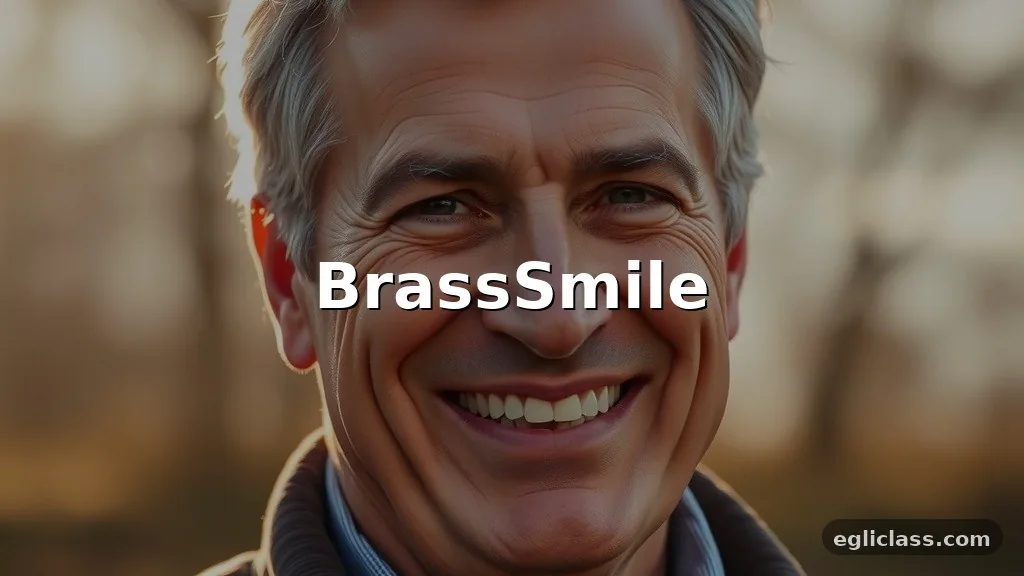
Improving your smile naturally is a goal that goes beyond simple vanity; it is about reclaiming your confidence and ensuring that your facial expressions reflect your inner state. When we talk about the BrassSmile approach to enhancing your grin, we are moving away from invasive cosmetic procedures and toward a holistic understanding of how muscles, posture, and mindset influence the way you present yourself to the world. A truly radiant expression is rarely the result of clinical intervention alone; it is almost always a combination of muscle memory, oral health, and the genuine emotion behind the gesture.
Understanding the Mechanics of a Genuine Smile

To improve your appearance, you must first understand the anatomy of a genuine, or Duchenne, smile. A Duchenne smile is characterized by the contraction of both the zygomatic major muscle—which pulls up the corners of your mouth—and the orbicularis oculi muscle, which creates those small, authentic crinkles around your eyes.
Many people struggle with “fake” looking expressions because they only engage the mouth, leaving the eyes looking static and disconnected. By learning to engage your eye muscles consciously, you can shift your facial expressions from polite, forced masks into warm, inviting gestures that feel much more authentic.
Practicing this involves a simple exercise: stand in front of a mirror and try to smile without using your mouth at all. Focus entirely on the area around your eyes, attempting to lift your cheeks slightly. Once you can isolate that movement, combine it with a gentle upward curve of the lips.
This creates a balanced look that signals warmth to others. When you do this often, it becomes a form of muscle memory, allowing you to bypass the awkwardness that usually accompanies posed photos. Remember that the goal is not to mimic a specific celebrity, but to allow your own facial structure to move in a way that feels comfortable and honest to your personality.
The Role of Oral Hygiene in Aesthetic Confidence
You cannot discuss improving your smile naturally without addressing the foundation: the teeth themselves. While you cannot change the structural shape of your jaw without professional dentistry, you can drastically improve the brightness and health of your mouth through consistent, mindful hygiene habits.
Many people neglect the gums, yet healthy, pink gums provide the perfect frame for your teeth. When your gums are inflamed or receding, it can make your smile look aged or strained, regardless of how well you move your facial muscles.
Incorporate flossing into your daily routine not just as a chore, but as a way to ensure your mouth looks vibrant. Staining is another common hurdle; tea, coffee, and acidic foods can dull the enamel over time. By moderating these intake habits and increasing your water consumption, you help maintain a neutral pH balance in your mouth, which prevents the erosion that leads to yellowing.
For those interested in the science of oral health, the American Dental Association provides comprehensive resources on maintaining long-term dental health through preventative care. Taking these steps ensures that when you do decide to show your teeth, you are doing so with the confidence that comes from a clean, healthy foundation.
Developing Facial Muscle Memory for Better Symmetry
Symmetry is often what people perceive as “pretty” or “attractive,” yet almost no human face is perfectly symmetrical. The key to a better smile is not seeking perfection, but rather reducing extreme imbalances that may be caused by tension or habitual resting positions.
Often, we develop a “dominant side” that we use for chewing or even for expressing emotion, which can lead to one side of the mouth pulling tighter than the other. To correct this, you need to engage in facial awareness exercises that encourage bilateral movement.
Start by practicing your smile in a mirror, but use your hands to gently guide the corners of your mouth upward at the same rate. This provides tactile feedback to your brain, helping it recalibrate how it signals the muscles on both sides of your face. You might find that your left side is more responsive than your right; this is normal.
By performing these slow, controlled repetitions for a few minutes each day, you are essentially training your brain to recruit the weaker muscles more effectively. Over time, you will notice that your expressions look more balanced and relaxed, even when you aren’t thinking about them. This is the essence of building a natural, effortless look.
The Impact of Posture on Facial Expression
It sounds counterintuitive, but your neck and shoulder posture have a massive impact on your facial expressions. When you slouch, your head tends to jut forward, which puts strain on the muscles under your chin and can contribute to the appearance of jowls or a heavy jawline.
By keeping your spine aligned and your shoulders pulled back, you create a natural lift in your face. This structural adjustment makes it easier to smile, as the skin around your neck and jaw is not being pulled downward by gravity and poor posture.
Think of your head as a balloon tethered to your shoulders; if the string is slack, the balloon sags. If you pull the string taut, everything lifts. When you are sitting at a computer or looking at your phone, check your neck position.
Are you looking down? This posture is the enemy of a youthful, bright expression. By lifting your chin and aligning your ears with your shoulders, you allow your facial muscles to sit in their natural, neutral position, making it much easier to transition into a full, bright expression when the moment calls for it.
How to Overcome the “Fake Smile” Hurdle
Many people feel that their smile looks fake because they are trying to “force” a certain shape. The secret to avoiding this is to focus on the intent rather than the muscles. When you try to force a shape, you are essentially performing a mechanical task, which the human brain is highly evolved to detect as insincere.
Instead, try to conjure a genuine memory or a thought that brings you actual amusement. When you focus on a feeling, your brain automatically triggers the correct neural pathways to engage the zygomatic and orbicularis muscles simultaneously.
If you are in a situation where you need to smile—such as a professional event or a photograph—and you don’t feel a surge of joy, try the “soft gaze” technique. Rather than staring intensely at the camera or the person, soften your focus. Let your eyes relax slightly, as if you are looking at something pleasant in the distance.
This subtle shift in your gaze prevents the “deer in the headlights” look that often ruins a photo. When your eyes are soft and your mouth is relaxed, the resulting expression is far more natural than anything you could achieve by staring into a mirror and practicing a rigid, teeth-baring grimace.
Incorporating Tongue Posture for Jawline Definition

A frequently overlooked aspect of facial aesthetics is tongue posture, often referred to as “mewing” in some circles, though the biological premise is about proper resting position. When your tongue is resting against the roof of your mouth rather than lying flat on the floor of your mouth, it provides internal support for the upper jaw and helps define the area under your chin. This subtle shift can prevent the mouth from looking “sunken” and provides a better foundation for your cheeks and lips.
To practice this, focus on bringing your entire tongue—not just the tip—to the roof of your mouth, right behind your front teeth. It should feel like a gentle suction. When you maintain this position throughout the day, it helps tighten the muscles under the chin and can make your jawline appear more defined.
This, in turn, makes your smile look more vibrant because the muscles surrounding your mouth have a firmer structure to work against. It is a subtle change that requires consistent effort, but it is one of the most effective ways to influence your facial profile naturally.
Dietary Habits and Their Effect on Facial Appearance
What you eat influences more than just your waistline; it affects the inflammation levels in your skin and the health of your dental enamel. A diet high in processed sugars can lead to systemic inflammation, which often manifests as puffiness in the face.
This puffiness can obscure your natural facial contours, making your smile look less defined. By focusing on whole, anti-inflammatory foods—such as leafy greens, berries, nuts, and fatty fish—you help your skin remain taut and clear, which creates a better canvas for your expressions.
Hydration is equally critical. When you are dehydrated, your skin loses elasticity, which can make fine lines around the mouth more prominent. If you want your smile to look its best, aim for consistent water intake throughout the day.
Additionally, avoiding excessive salt is a simple, effective way to reduce facial bloating. When your face is not holding onto excess water, your features appear more sculpted, and your smile looks more precise and intentional. Think of your body as a system where every input reflects in your outward presentation.
The Psychology of Smiling and Self-Perception
The way you feel about yourself is the most significant factor in how your smile is perceived by others. If you feel insecure about your teeth or the shape of your mouth, you will naturally pull back, creating a “tight” or “guarded” expression.
This is why the BrassSmile philosophy emphasizes self-acceptance as a primary tool for improvement. When you stop obsessing over perceived flaws, the tension in your face naturally dissipates.
Try to practice positive self-talk before social interactions. Instead of worrying about how your mouth looks, focus on the person you are interacting with. When you shift your focus outward, your brain stops monitoring your own facial movements, which allows your expression to become fluid and organic.
People are naturally drawn to those who seem comfortable in their own skin. By letting go of the internal critique, you allow your face to perform its natural function: expressing warmth and connection. This psychological shift is often more effective than any physical exercise, as it removes the barrier between your inner emotion and your outward expression.
Establishing a Daily Routine for Facial Wellness
Consistency is the cornerstone of any improvement, and facial wellness is no exception. You don’t need to spend hours in front of the mirror, but you do need to be intentional. Create a morning routine that includes a quick check of your posture, a moment of tongue placement, and a conscious effort to relax your jaw.
Tension in the jaw, often caused by stress, is a major culprit in making smiles look strained. By consciously dropping your tongue and unclenched your teeth, you set a baseline of relaxation for the day.
In the evening, consider gentle facial massage. Using your fingertips to massage the muscles around your cheeks and jaw can help release the tension accumulated throughout the day. This simple practice improves circulation, which brings more blood flow to the skin, giving you a healthier, more vibrant look.
When you combine these small, daily habits with a commitment to oral health and a positive mindset, you create a cumulative effect. Over weeks and months, you will find that your “natural” face is more relaxed, your smile is more frequent, and your overall presence is more magnetic.
The Long-Term Benefits of Natural Smile Enhancement
Improving your smile naturally is a journey that yields benefits far beyond the aesthetic. By focusing on the health of your mouth, the alignment of your posture, and the relaxation of your facial muscles, you are investing in your long-term well-being.
A person who smiles often and with genuine expression experiences lower stress levels, as the act of smiling releases endorphins and reduces cortisol. This creates a positive feedback loop: you feel better, so you smile more; you smile more, so you feel better.
Furthermore, by avoiding unnecessary cosmetic procedures and focusing on natural habits, you are preserving your facial integrity. Many people resort to fillers or surgery to fix issues that are actually caused by poor posture, tension, or lack of muscle tone.
By addressing these root causes, you achieve a look that is uniquely yours rather than a generic, altered version of yourself. You gain the confidence that comes from knowing your appearance is a reflection of your health and your habits, rather than a product of external modification.
Ultimately, the BrassSmile approach is about empowering yourself to take control of your features. You are the architect of your own expression. By paying attention to the details—how you hold your mouth, how you care for your teeth, how you carry your posture, and how you think about your own image—you can transform the way you present yourself to the world.
It is not about reaching a destination of perfection, but about enjoying the process of becoming more conscious, more comfortable, and more radiant in your daily life. Start small, remain consistent, and let your natural smile be the best reflection of who you are.
Addressing Common Myths About Smile Correction
There are many misconceptions about how to “fix” a smile, often perpetuated by social media trends and quick-fix products. It is important to approach these claims with skepticism. For example, the idea that certain mouth-exercises can drastically alter the bone structure of an adult jaw is largely unsupported by science.
While you can strengthen the muscles that overlay the bone, the underlying structure is fixed after puberty. Understanding this distinction is vital; it prevents you from wasting time on ineffective methods and helps you focus on what actually works: muscle tone, skin health, and genuine expression.
Similarly, be wary of “natural” whitening remedies that involve abrasive ingredients like baking soda or lemon juice. While these might seem like an easy, home-grown solution, they can cause irreversible damage to your enamel. Your teeth have a limited amount of enamel, and once it is worn away, it does not grow back.
Always prioritize the integrity of your dental health over a quick aesthetic gain. If you want a brighter look, focus on removing stains through consistent hygiene and dietary choices rather than using harsh chemicals that could weaken your teeth in the long run.
Finally, remember that the “perfect” smile is a subjective and often manufactured ideal. The beauty of a human smile lies in its individuality—the slight gap, the specific way your eyes crinkle, the unique shape of your lips. When you stop chasing an unattainable standard, you liberate yourself to develop a version of your smile that is authentic and uniquely yours.
This is the ultimate goal of any natural improvement strategy: to move toward a version of yourself that is healthier, more confident, and more expressive, while remaining fundamentally human and true to your own character. By focusing on these core pillars, you will find that the most attractive smile is the one that comes from a place of genuine, well-cared-for confidence.